The semantic layer built for AI
Motley turns your warehouse into a governed, agent-ready analytics platform, so your agents, users, and tools have a flexible, extensive and context-aware source of truth from your data
.png)
Trusted by:







Agent-ready analytics for your internal data
Motley turns your warehouse into analytics your AI agents can use

SLayer by Motley: the OSS semantic layer your agents query. Define every metric once; Add context and expose it over MCP, REST, Python, or CLI. Same query, same answer, every time.
Motley Platform: Hosted semantic layer with the features and tools you need for fast production deployment:
- security
- access rights
- prebuilt connectors
- document logic
.jpg)
Inside Motley
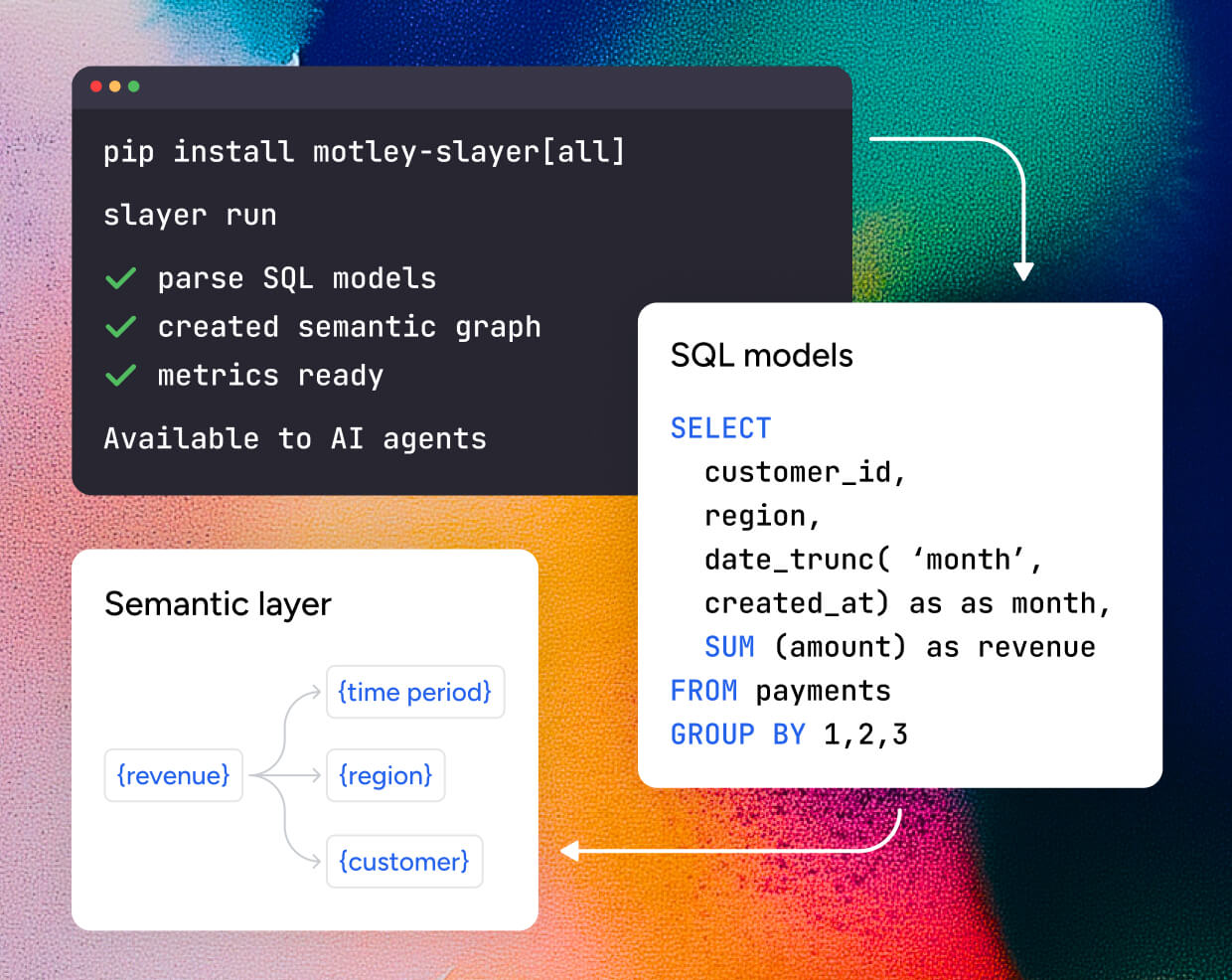
SLayer by Motley
The OSS semantic layer that makes AI agents actually understand your data.
SLayer sits between your warehouse and your agents. Agents query in terms of measures, dimensions, filters, and time grains. SLayer compiles to SQL, runs it against the warehouse, and returns typed results. One definition of every metric, enforced across every agent and app, less silent failures
Key points:
Agent-first design: MCP, REST API, and Python SDK
Rich metric expressions: reusable measures, dimensions, filters, and logic
Embeddable semantic layer: use via API, plugin, or inside your product
Datasource-agnostic: Postgres, Snowflake, BigQuery, ClickHouse, and more
MIT licensed and extensible
View on GitHub
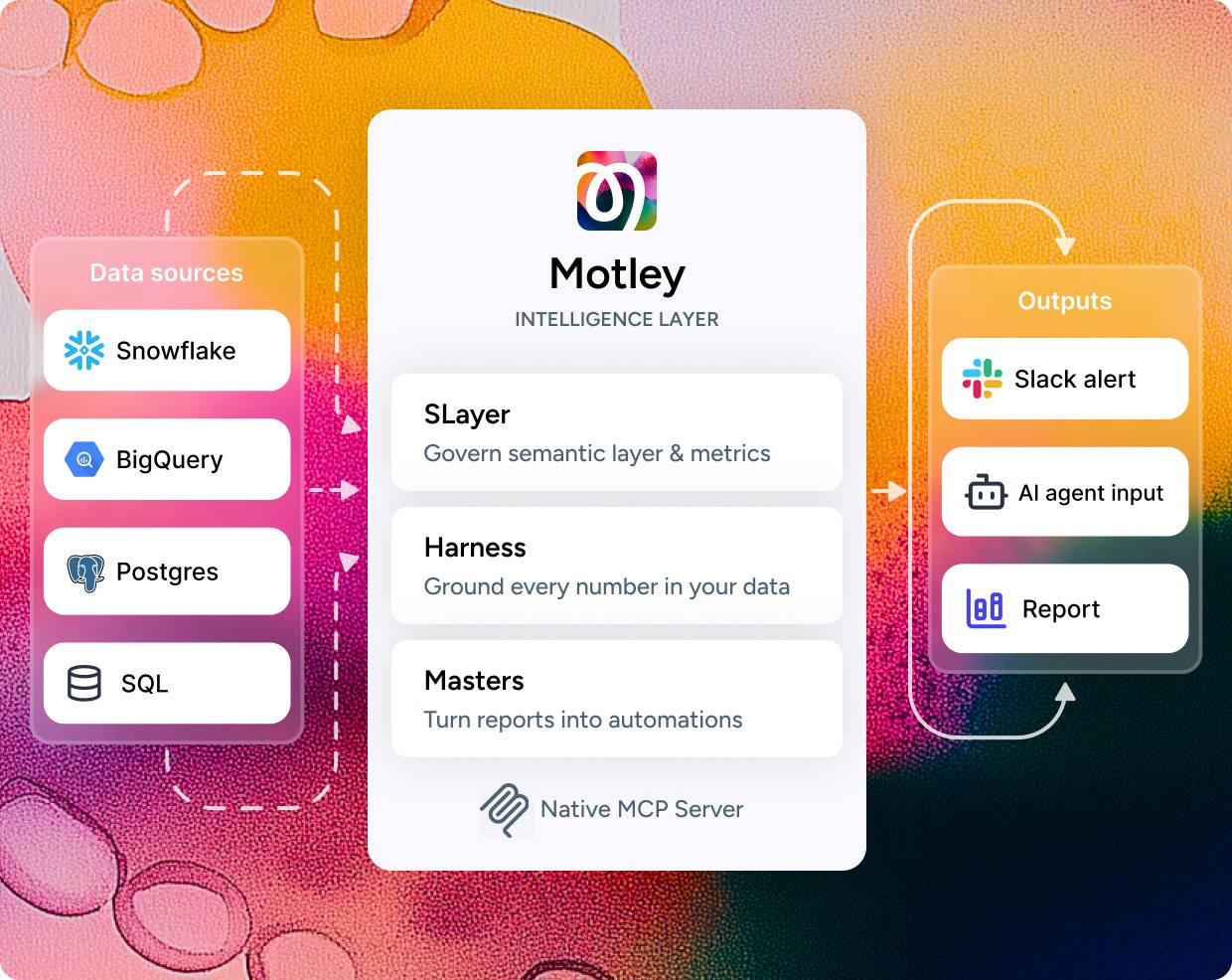
Motley Platform
A hosted semantic layer with the features and tools you need.
Motley wires your databases to your agents. Governed metrics with SLayer. User / Access management. Built-in tools to make deployment and monitoring a breeze.
Key points:
Native MCP server for AI agents
Governed metrics via SLayer, our open-source semantic layer
Connects to your SQL databases and warehouses
User Access management
Reporting Engine
Learn more about the platform
Integrations


.svg)


.png)




How It Works

Connect Your Data
Plug in your database, data warehouse, or BI tool. SLayer introspects the schema and generates semantic models automatically: get started in minutes not weeks.

Define What Matters
Refine your models with business-specific metrics, dimensions, and context. This is where organizational knowledge becomes machine-readable. Define it once; every agent and app uses the same definitions.

Connect your agents and tools
Connect your existing tools, your preferred agents and or use Motley's reporting engine for your workflows

Ship It
Create workflows, launch talk to your data agents on a single source of truth
Your data, your story, your way.
The Problem
Before Motley

Agents hallucinate metrics because they're writing SQL against a schema they don't understand
Every team defines "ARR" or "active user" slightly differently, and no one notices until the board deck
Reports are one-offs – rebuilt by hand every cycle, impossible to audit
Shipping reporting in your product means staffing a data platform team
Dashboards answer "what happened" but not "why it matters": and no one reads them
With Motley
Agents query through a governed semantic layer, not the raw schema
One definition of every metric, enforced across every agent and surface
Reports are markdown files: versioned, diffable, forwardable, regenerable
Ship in-product reporting in weeks: without staffing a data platform team
Reports answer "why it matters": narrative, charts, and tables in one artefact
Whoʼs Motley for
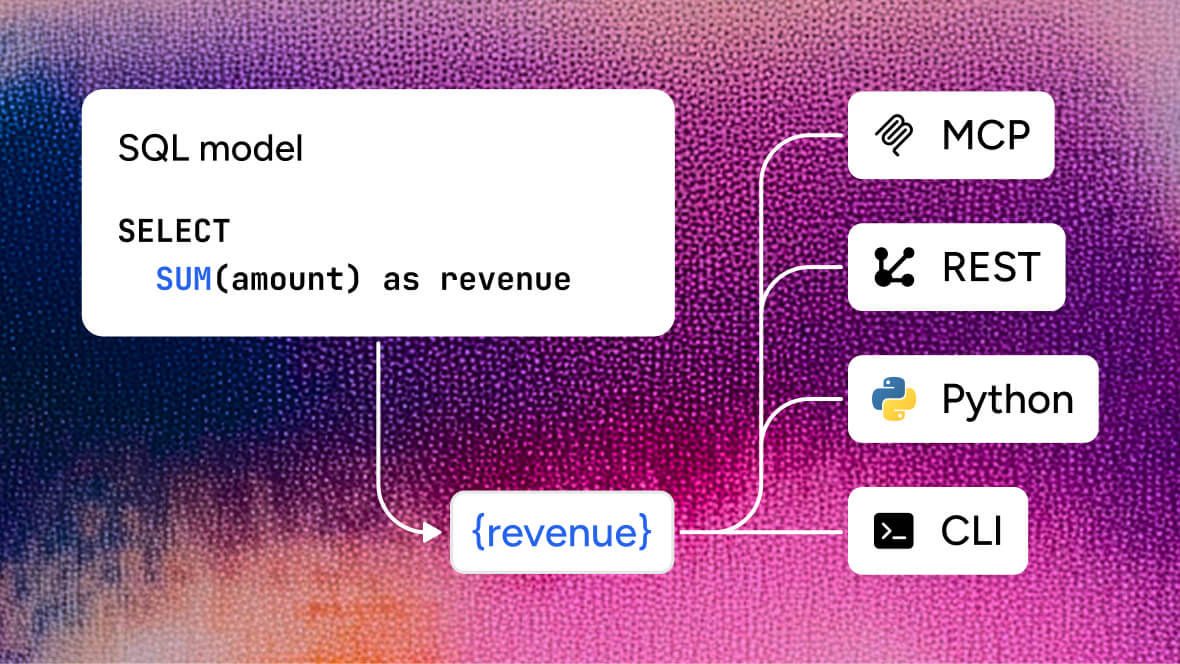
Data & Engineering Teams
One semantic layer, every agent. Define metrics once; expose them via MCP, REST, Python, or CLI.

Product Teams Building Reporting
Ship AI reporting inside your product. Embedded Motley handles the data layer, narrative, and rendering: no platform build.
Revenue Operations
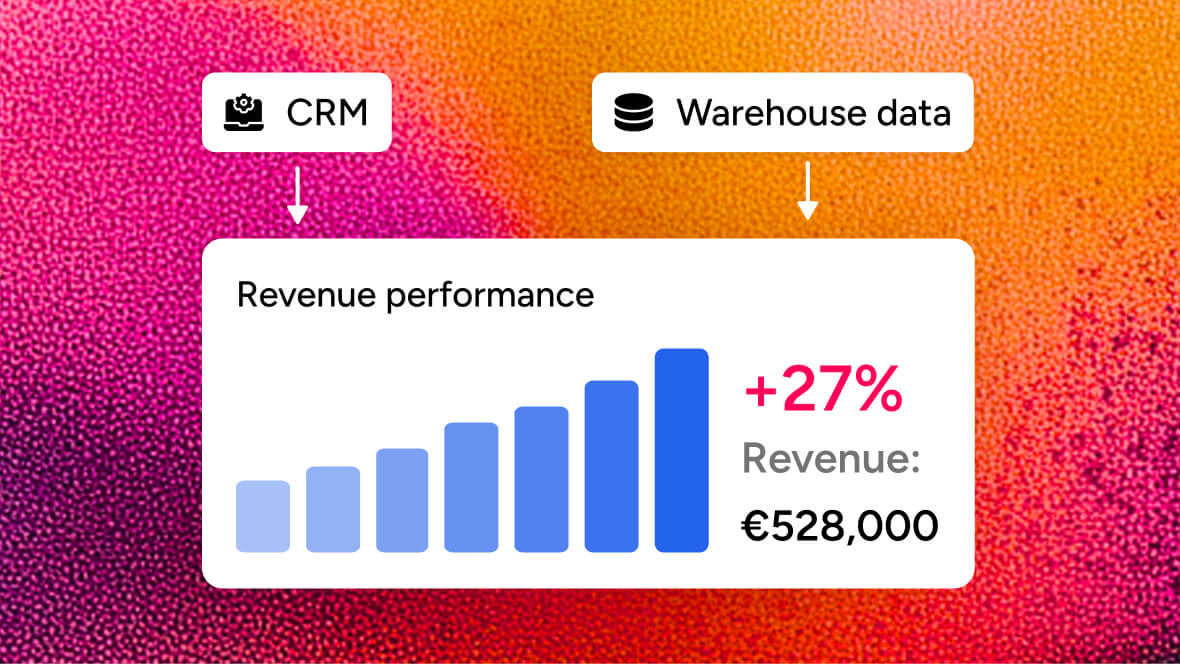
Generate pipeline reviews, forecast decks, and performance summaries from live CRM and database data.
Customer Success Teams
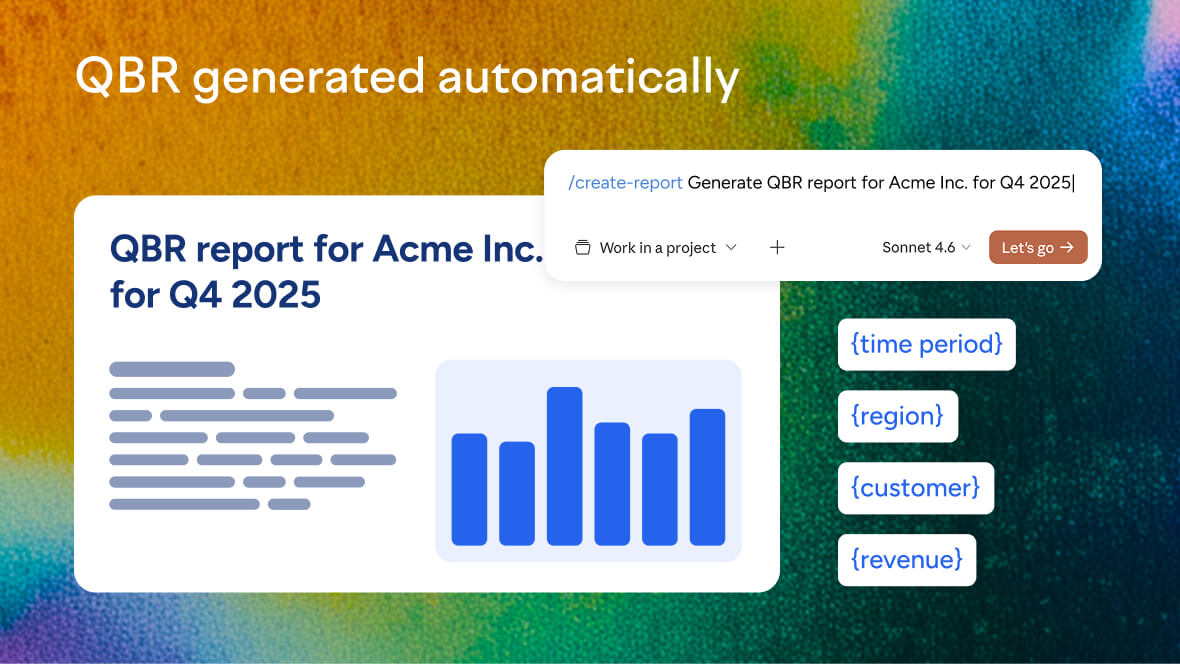
Automate QBRs, monthly check-ins, onboarding updates, and value reports. Spend your time on retention and growth, not slide assembly

"Our challenge is that none of the existing AI tools seems to do the data crunch, visualisation and consistent report building at the same time. ChatGPT is awfully inconsistent, Gamma can't crunch the data and Julius doesn't have a repeatable process"

Erik Beentjes
FAQs
Motley is an open-source semantic layer (SLayer) and a reporting engine built on top of it. Agents query your data through SLayer; Motley turns those queries into reports you can forward, version, and embed.
SOC 2 Type 2 on track for 2026. Data shared with model providers is scoped to the report being generated, never used for training, and can be self-hosted end-to-end if you run SLayer yourself.
Text-to-SQL hallucinates joins, silently redefines metrics, and produces different numbers on different runs. A semantic layer constrains the agent to a governed set of measures and dimensions: same query, same answer, every time.
Data and engineering teams that want to expose their warehouse to AI agents safely. Product teams shipping reporting features. Developers who want their agents to generate accurate reports instead of guessed SQL.
SLayer is MIT-licensed and free. The Motley platform pricing scales with your usage, reach out to us to discuss pricing
Reports, not dashboards. Markdown as the source of truth. A semantic layer you can actually read the code of. Built for the agentic era from the first commit.
SLayer is agent-native: it exposes 14 tools over MCP out of the box, supports composable time formulas, and ships with pluggable storage. It's designed to sit in front of AI agents, not BI dashboards.